
July 10, 1985
The sinking of a ship. The rising up of courage.

40 years ago today I was in a taxi with Sebia Hawkins, returning to the Greenpeace USA office near Dupont Circle from a trip to Capitol Hill. Who we were lobbying, with what aim, I no longer recall. But that moment in the cab is seared into my memory.
The radio was on. The news. An explosion aboard the Greenpeace ship Rainbow Warrior in Auckland had sent it to the bottom of the harbor. Two crew members were missing. It was 1985. No cellphones, no way to squeeze any other information out of that radio. Just a heart-stopping piece of news for two people who knew and loved people who were on that ship. Sebia and I were in each others arms immediately, and stayed that way for the seemingly endless time it took for the cab to get to the office, imagining the worst.
When we pulled up at the curb we flew out of that cab. I don't think either of us had ever bolted up a set of stairs faster in our lives. The people we knew on board were colleagues, but when your colleagues are people you risk your freedom and your life with, they register as more than that. It felt like we had loved ones aboard that ship. Like we had family aboard that ship.
The office was in a chaos of tears and ringing phones. Peter Dykstra, the head of communications, told us what he knew. The two missing crew members were now one: Hannah, who had been out for a walk, had been found safe, but photographer Fernando Pereira was still missing. Dykstra gave us a prepared statement and told us to start answering press calls.
We all spent the day processing news and rumors. Fernando's body was found, drowned near his cabin, where he’d attempted to rescue his camera equipment. Captain Pete Willcox handily shut down rumors that a fuel explosion was at fault. Nobody at that point was imagining the truth that would unfold over the rest of the summer, that French secret service agents, on orders from the top of the Ministry of Defense, had placed two explosive limpet mines on the hull during the night, in the fantastically idiotic belief that they would get away with it and deter Greenpeace and people of the Pacific from opposing their nuclear weapons testing program at Moruroa. Honestly, we didn't think they were that stupid.
But at the moment Dykstra spoke the name "Fernando Pereira" and was handing us those phones, what I remember most clearly was a perhaps unforgivably selfish thought: It wasn't my buddy and mentor Steve Sawyer. It wasn’t my friend Kelly’s Steve. Steve was OK.
The sinking changed the course of my life, and the course of Greenpeace, forever. The then chairman and chief mischief maker David McTaggart pulled me out of my nuclear campaigner role to do press in Paris as the story unfolded, and to eventually be part of a team with Sawyer, Willcox, Duncan Currie, and Cindy Baxter that would successfully sue the French Government for damages sufficient to build a new ship and give literal truth to the tagline "You can't sink a rainbow."
Peter Bahouth recruited Lloyd Cutler, who had served in the Clinton and Carter White Houses, to lead the arbitration against the French Government. Cutler came out of retirement to handle the case. It amused him. He delivered. It was the first case in which a private non-governmental organisation was granted standing against a government, and the first ever award of “aggravated damages,” a court’s way of saying the crime was particularly heinous and ought to be discouraged, to the tune of 8.1 million US dollars.
All through the dog days of August of 1985 in Paris, Remi Parmentier was working his network of political and journalist connections to run an independent investigation into the bombing as the French political system desperately tried to immunize itself from damage. An official investigation was launched to whitewash the affair. Remi had better information than the official investigators. Working with a young investigative reporter from L'Express, he was able to locate Xavier Maniguet, one of the agents who had delivered the mines to New Zealand aboard the sailing ship Ouvea, leaving an evidence trail that Sawyer had quipped was so obvious it was just shy leaving behind a baguette, a beret, and a bottle of Bordeaux.
Remi, McTaggart, Sawyer, Dykstra, and Sebia are all gone now, and every year my Greenpeace colleagues mark this anniversary in diminished numbers.
Were they alive, every one of them would have a story to tell this day about that day.
As it is, we're left to tell their stories for them. Stories that all come down to the same moral. And I personally think it's something a bit deeper than You can't sink a rainbow. It's a fine tagline, but it's shy of a moral. It suggests a rule of the universe that requires no action, no standing up, no speaking out. It's not a lesson in how to live. The real lesson of that day, and ultimately the story of the lives of Remi and David and Steve and Peter and Sebia and the lives of all of us who sailed together, fought together, shouted and screamed at one another and loved and triumphed and laughed and celebrated together, is about courage. It's about the belief that courage is contagious, and that one day the aggregate of all that individual and collective courage will deliver the brighter tomorrow that our fallen comrades will never see, but whose hands and hearts will have helped in the making
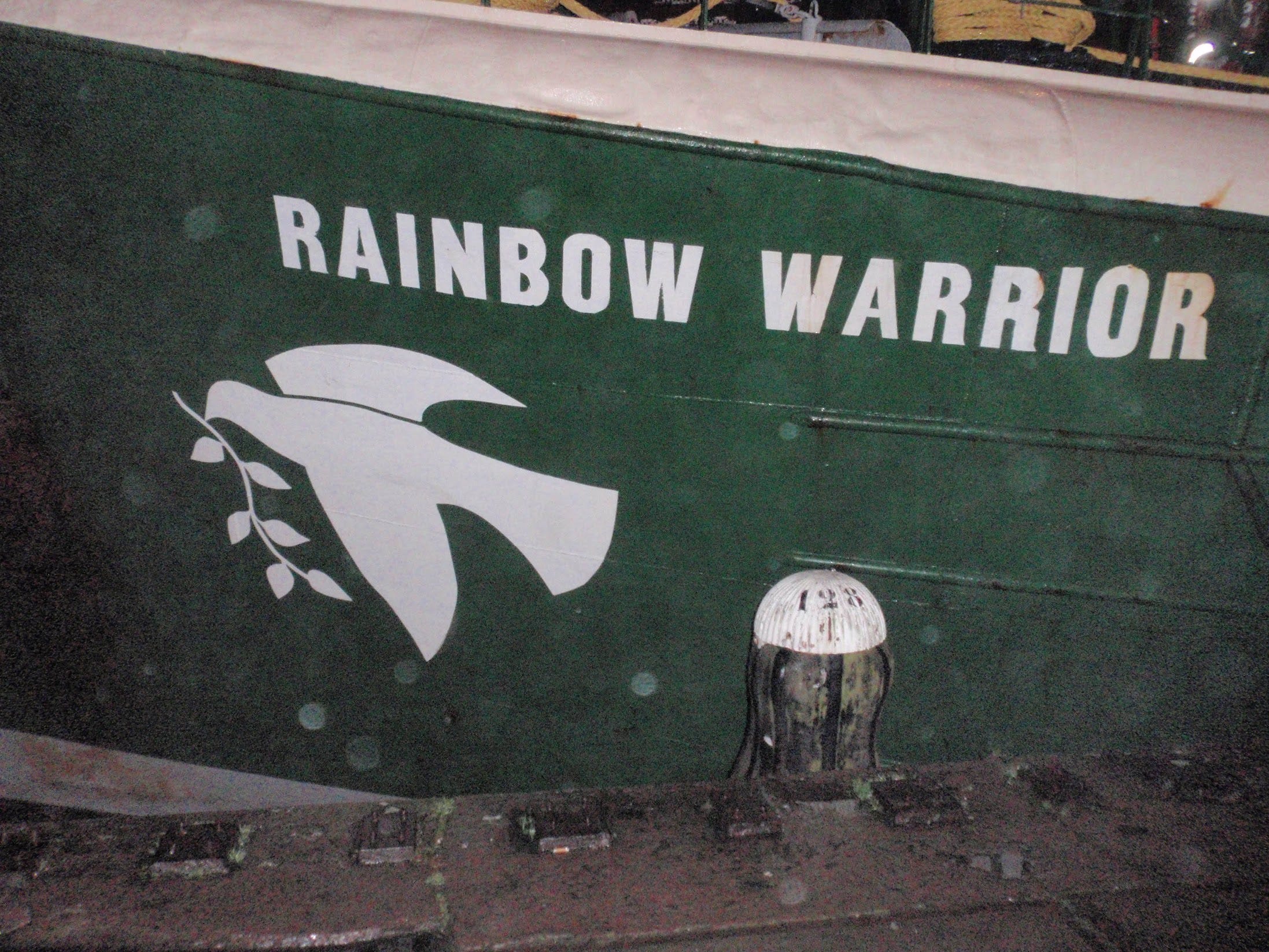
.
Thank you Brian for these beautiful memeories. Now more than ever it is important to remember the manies that have made Greenpeace what is now. I feel honored to be a Rainbow Warrior and I walk every day trying to have that courage! Hope to meet you soon again.
Many true words Brian... thinking of them all tonight....